This guide contains affiliate links to eBay. See the note at the end.
Quick answer: Your Japanese import's radio only finds a few stations because Japan's FM band stops at 90 MHz (95 MHz on newer radios), while Australia and the UK use 87.5–108 MHz and New Zealand 88–108 MHz. The cheapest fix is an FM band expander (not recommended in New Zealand); the complete fix is a new head unit with a fascia kit, harness and aerial adapter, plus a reverse camera adapter and steering wheel control interface if you want to keep those.
Parts in this guide, with live eBay listings
 FM Radio Band Expander for Japanese Import Cars
from 17.43 AUD · 5 live listings →
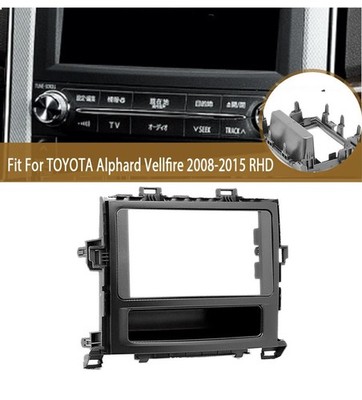 Toyota Alphard / Vellfire 30 Series (AGH30, AYH30, GGH30) Android Head Unit Fascia Kit
from 69.33 GBP · 1 live listings →
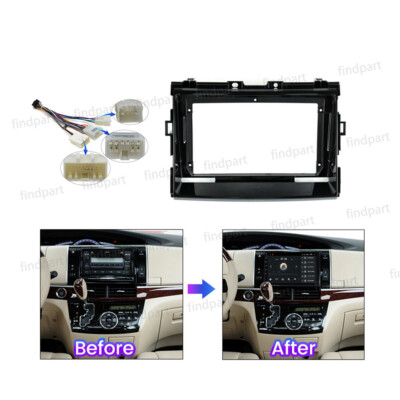 Toyota Estima ACR50 / GSR50 / AHR20 Android Head Unit Fascia Kit
from 27.55 USD · 4 live listings →
 Nissan Elgrand E51 / E52 Android Head Unit Fascia Kit
from 49.59 GBP · 3 live listings →
 Reverse Camera Adapter for Toyota Japanese Import Head Units
from 23.65 AUD · 12 live listings →
 Steering Wheel Control Interface for Japanese Import Cars
from 107.16 USD · 1 live listings →
Lowest prices across eBay AU, US, UK and DE as of 23 Oct 2026. Prices change, check eBay. Ad / affiliate links.
If the radio in your Japanese import finds two stations and a lot of static, nothing is broken. It's just still tuned to life in Japan. Japan uses a different FM band from Australia, New Zealand and the UK, and the factory unit simply can't tune most of your local stations.
The satnav that only knows Tokyo and the TV that shows nothing have the same root cause. This guide explains why, then walks through the fixes from the cheapest to the most complete, including how to keep the factory reverse camera and steering wheel buttons.
Why your radio only finds a few stations
| Country | FM band |
|---|---|
| Japan | 76–90 MHz on older radios, 76–95 MHz on newer ones |
| Australia, UK | 87.5–108 MHz |
| New Zealand | 88–108 MHz |
Japan extended its FM band to 95 MHz when "Wide FM" services started in December 2014, so radios from around that time onwards may tune higher than older ones. Either way, anything above 90 or 95 MHz is invisible to a Japanese radio, and in most cities that's most of the stations.
On top of that:
- TV tuners won't work. Japan uses its own digital TV standard (ISDB-T). Australia, New Zealand and the UK use DVB-T or DVB-T2.
- Navigation maps cover Japan only, and updating or converting them is rarely worth the cost.
- No digital radio. Japanese factory units don't receive DAB+, which is available in Australian capital cities, or the DAB and DAB+ services used across the UK. (New Zealand has no DAB services on air, so this one doesn't matter there.)
Option 1: An FM band expander (cheapest)
An FM band expander is a small box that plugs in between the aerial and the radio. It shifts higher-frequency stations down into the range your Japanese radio can tune.
Good for: owners who just want local FM radio and are happy with the rest of the factory unit.
Things to know:
- It's usually a simple plug-in job behind the head unit, but you'll need to remove some dash trim.
- Results vary. Many expanders only shift part of the band, so some stations may still be missing, and the frequency shown on the screen won't match the real one.
- It doesn't fix the maps, TV or the Japanese menus.
- In New Zealand, skip it. Radio Spectrum Management (RSM) doesn't endorse band expanders, says some sold in NZ don't meet local standards and have interfered with important radio systems, and warns that supplying, installing or using one may lead to compliance action. RSM recommends replacing the radio instead (Option 2).
→ FM band expanders for Japanese import cars
Option 2: Replace the head unit (most complete)
Swapping the factory unit for a modern Android or CarPlay head unit solves almost everything at once: the full local FM band, Apple CarPlay or Android Auto for maps, Bluetooth and English menus. If you want digital radio in Australia or the UK, pick a unit with a DAB+ tuner and budget for a DAB aerial.
You'll need:
- A fascia kit made for your car's dash, so the new unit fits neatly. These are model-specific, and Japanese-market dashes often differ from the export version of the same car.
- A wiring harness to connect the new unit to the car's plugs without cutting factory wires.
- An aerial adapter, because Japanese aerial plugs often don't match aftermarket units.
- Optional: a reverse camera adapter and a steering wheel control interface (see below).
We list fascia kits for the most common imports:
- Alphard / Vellfire 30 series · Alphard / Vellfire 20 series
- Toyota Aqua NHP10
- Toyota Voxy / Noah 80
- Toyota Estima 50
- Nissan Elgrand E51 / E52
- Honda Stepwgn RK / RP
Before you buy, check one thing: on some cars, the factory screen also controls the air-con, vehicle settings or other features. Replacing that kind of unit is much harder, and sometimes not possible without losing functions. Look at what your screen does, and ask the seller or an installer if you're unsure.
Keeping the reverse camera
Many Japanese family cars have a factory reverse camera, often wired to the original head unit through a Toyota-, Nissan- or Honda-specific plug. A new head unit won't recognise it without help.
A reverse camera adapter converts that factory connection into a standard video input that aftermarket units accept. It usually also handles the power the camera needs.
- Check that the adapter matches your car's camera plug. Toyota alone has used several types.
- If your car has a multi-view or panoramic camera system, keeping all of its features with an aftermarket unit is much harder. Ask before you buy.
→ Reverse camera adapters for Toyota Japanese import head units
Keeping the steering wheel buttons
Volume and track buttons on the steering wheel send signals the factory unit understands. An aftermarket unit needs a steering wheel control interface to translate them.
- Some head units can "learn" simple resistance-based buttons without an interface. Check your unit's manual.
- Otherwise, pick an interface that lists your make and model, and check it supports your head unit brand.
→ Steering wheel control interfaces for Japanese import cars
DIY or installer?
A band expander is a reasonable DIY job if you're comfortable removing trim. A full head unit swap with camera and steering controls is also doable, but it involves several adapters, careful wiring and some patience.
If you'd rather have it done, a car audio installer who works on Japanese imports will have seen your car before. Buy the parts in advance if you want to control the cost, but check with the installer first, as some prefer to supply their own.
Which option is right for you?
| You want… | Do this |
|---|---|
| Local FM radio, nothing else | FM band expander (not recommended in NZ) |
| Phone maps, CarPlay / Android Auto, English menus | New head unit + fascia kit + harness |
| …and keep the factory camera | Add a reverse camera adapter |
| …and keep the wheel buttons | Add a steering wheel control interface |
FAQ
Why does my Japanese import radio only get a few stations?
Japanese radios tune 76–90 MHz (76–95 MHz on newer ones), so anything above 90 or 95 MHz is invisible to them. In most cities that's most of the stations.
Does an FM band expander work?
It shifts higher-frequency stations down into the range your Japanese radio can tune, but results vary: many only shift part of the band, the frequency on screen won't match the real one, and it doesn't fix the maps, TV or Japanese menus.
Are FM band expanders legal in New Zealand?
Radio Spectrum Management (RSM) doesn't endorse them, says some sold in NZ don't meet local standards and have interfered with important radio systems, and warns that supplying, installing or using one may lead to compliance action. RSM recommends replacing the radio instead.
Can I keep my factory reverse camera with a new head unit?
Usually, with a reverse camera adapter that converts the factory Toyota-, Nissan- or Honda-specific connection into a standard video input. Check the adapter matches your car's camera plug, and ask before buying if you have a multi-view or panoramic system.
Why doesn't the TV work in my Japanese import?
Japan uses its own digital TV standard (ISDB-T), while Australia, New Zealand and the UK use DVB-T or DVB-T2.
Other things every import needs
The radio is only one of the small fixes most imports need. English owner's manuals, JOBD-compatible scanners and child-seat anchor kits are all in one place: Just Imported? Fix These First. For the rest of the "wait, what?" moments, see 10 week-one surprises of a Japanese import.
And if you're still learning your car's codes, start with how to read a Japanese model code.
Ad / Affiliate links: YOU SHOULD, SHA. Parts links to eBay. We earn a commission from eBay on qualifying purchases made through those links, at no extra cost to you. We are not eBay and not the seller. Always confirm fitment with the seller or a qualified mechanic.