This guide contains affiliate links to eBay. See the note at the end.
Quick answer: almost every "fault" a new Japanese import shows in its first week is the car working perfectly for a country it no longer lives in. The radio, sat nav, TV, toll reader, warning messages and paperwork were all built for Japan. Most fixes are cheap, and none of them mean you bought a lemon.
Parts in this guide, with live eBay listings
 FM Radio Band Expander for Japanese Import Cars
from 17.43 AUD · 5 live listings →
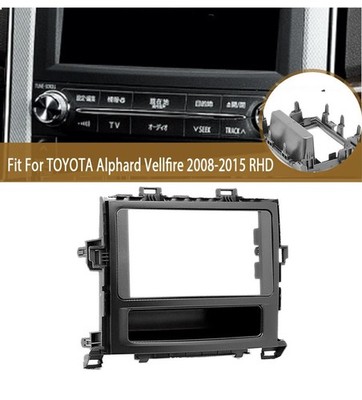 Toyota Alphard / Vellfire 30 Series (AGH30, AYH30, GGH30) Android Head Unit Fascia Kit
from 69.33 GBP · 1 live listings →
 Nissan Elgrand E51 / E52 Android Head Unit Fascia Kit
from 49.59 GBP · 3 live listings →
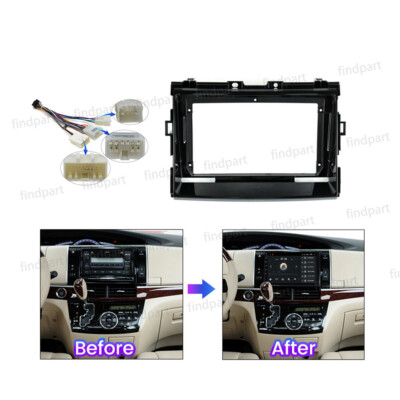 Toyota Estima ACR50 / GSR50 / AHR20 Android Head Unit Fascia Kit
from 27.55 USD · 4 live listings →
 JOBD-Compatible OBD2 Scanner for Japanese Import Cars
from 76.79 AUD · 9 live listings →
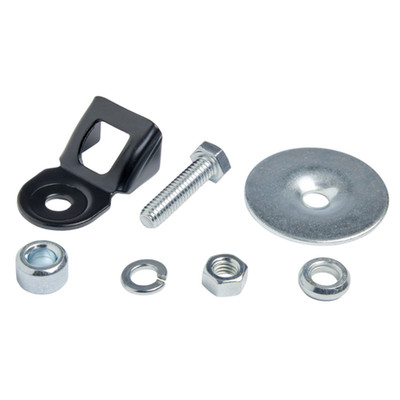 Child Restraint Anchor Bolt Kit (Australia)
from 13.99 AUD · 1 live listings →
Lowest prices across eBay AU, US, UK and DE as of 23 Oct 2026. Prices change, check eBay. Ad / affiliate links.
Congratulations. You've imported a car that was designed, built and lovingly maintained for roads thousands of kilometres away. It's spotless, it's well equipped, and for the next week it's going to behave like an exchange student who hasn't unpacked: polite, capable, and still running on Tokyo time.
Here's what to expect, roughly in the order you'll notice it.
1. The radio finds two stations and a lot of static
You hit scan. It finds one station, then a lot of static, then settles on a frequency that sounds like a podcast recorded inside a washing machine. Nothing is broken: Japan's FM band sits lower (76–95 MHz on newer radios, 76–90 MHz on older ones) than the 87.5–108 MHz used in Australia and the UK, or 88–108 MHz in New Zealand (Wikipedia: FM broadcast band). Most of your local stations simply live where a Japanese radio can't go.
Fix: an FM band expander (cheap, plugs in behind the radio) or a new head unit (the full fix). Full details in our guide to fixing the radio, reverse camera and steering controls.
→ FM band expanders
2. The sat nav would love to take you to Osaka
The factory navigation is in Japanese, and its maps cover Japan. It will look for Japan underneath you, fail to find it, and settle into the quiet confusion of a dog whose owner has moved the food bowl.
Fix: a replacement head unit with Apple CarPlay or Android Auto, so your phone does the navigating. Most popular imports have a fascia kit that makes an aftermarket unit look factory-fitted.
→ Fascia kits for the Alphard 30, Voxy / Noah 80, Aqua, Elgrand, Estima and Step WGN
3. The TV screen shows a very confident "no signal"
Lots of Japanese family cars came with a TV tuner, which explains the screen in the roof. It won't pick anything up here, however long you wave it at the sky: Japan uses its own digital TV standard (ISDB-T), while Australia, New Zealand and the UK use DVB-T or DVB-T2. No aerial adjustment will change that.
Fix: treat the rear screen as a screen, not a TV. A new head unit can usually feed it video, or the kids can bring tablets like everyone else.
4. There's a slot by the steering wheel that wants a card you don't have
That's the ETC unit, Japan's electronic toll collection system. It reads a Japanese ETC card and talks to Japanese toll gates. Outside Japan it does nothing except, on some cars, beep or say something in Japanese at start-up because there's no card in it. Every single morning. It's not angry, just disappointed.
Fix: nothing to fix. It's harmless. If the start-up message annoys you, an auto electrician can tell you whether it's safe to disconnect on your car.
5. The car talks to you, politely, in Japanese
Reversing warnings, sliding-door warnings, start-up greetings from the navigation: plenty of Japanese cars have voice prompts, and they're all in Japanese. Most of the time they're telling you something sensible. You'd just like to know what.
Fix: an English owner's manual covers the warnings, the lights on the dash and the settings menus. It also explains the buttons you've been too nervous to press.
→ English owner's manuals for Japanese imports
6. The parts website asks for a VIN your car doesn't have
You go to order an oil filter and the website wants a 17-character VIN. Your car has a short frame number instead, something like ZWR80-0123456 (a made-up example), because Japanese-market cars generally don't use the 17-character VIN format. The website and your car are now staring at each other across a cultural divide.
Fix: search by the chassis code (the bit before the dash) instead of the model name. Our guide to reading a Japanese model code explains it in five minutes, and the free Model Code Lookup does the decoding for you.
7. The mechanic plugs in a scanner and gets nothing
Some generic OBD2 scanners don't communicate properly with Japanese-market cars, especially older ones built to Japan's own on-board diagnostics rules (JOBD). The car isn't hiding anything. It's speaking a dialect.
Fix: a scanner that lists JOBD support, or a workshop that sees a lot of imports.
→ JOBD-compatible OBD2 scanners
8. The battery has a code like "46B24L" and the shop looks blank
Japanese batteries use a JIS size code. In 46B24L, the 46 is a performance rank, B is the size class, 24 is roughly the length in centimetres and L tells you which side the terminals sit on.
Fix: match the size class, length and terminal side; the performance number can go up but shouldn't go down. Hybrids often need a specific auxiliary battery, so check those by part number. More in the model code guide.
9. Nobody told the car about its recalls
When a maker issues a recall in Japan, the notice goes to the owner registered in Japan, which is no longer you. And because your car was never sold new here, your local dealer may not have the recall on their system.
Fix: check the frame number on the Japanese recall search sites. The sites are in Japanese, but the job is mostly typing your frame number into a box, and a browser translation tool covers the rest. Here's how to check Japanese recalls on your imported car. While you have the frame number out, it is also what you need to check the car's odometer history.
10. The child seat anchor points are in "creative" places (Australia)
Australian child restraints use a top tether strap, and Australian Design Rule 34 sets the rules for the anchorages they clip into. Japanese cars weren't built with your local seats in mind, so some imports need an anchor point added or a bolt fitted during compliance. This is the one item on the list that isn't funny: get it right before the kids get in.
Fix: ask your compliance workshop what was fitted and where, and follow the child seat's own instructions when you install it.
→ Child restraint anchor bolt kits
The week-one shopping list
| Problem | Cheap fix | Proper fix |
|---|---|---|
| Radio misses local stations | FM band expander | New head unit |
| Japanese-only sat nav | Phone on a mount | Head unit with CarPlay / Android Auto |
| TV tuner, no signal | Ignore it | Use the screen for video from a new head unit |
| Japanese warnings and menus | Translation app | English owner's manual |
| Parts sites want a VIN | Search by chassis code | Keep model code and frame number on your phone |
| Scanner won't connect | Workshop that knows imports | JOBD-compatible scanner |
| Unknown recall status | Frame-number recall search | Ask the maker or a dealer to confirm |
Everything on this list lives in one place: Just Imported? Fix These First.
FAQ
Why does my Japanese import's radio only get a few stations?
Japan's FM band covers 76–95 MHz (76–90 MHz on older radios), while Australia and the UK use 87.5–108 MHz and New Zealand uses 88–108 MHz. A Japanese radio can't tune most local stations. An FM band expander or a replacement head unit fixes it.
Can I change the Japanese sat nav to English?
Usually not in a useful way: even where a menu can be switched, the maps cover Japan only. Most owners replace the head unit with one that supports Apple CarPlay or Android Auto.
Will the TV in my Japanese car work in Australia, New Zealand or the UK?
No. Japanese car TV tuners receive ISDB-T, Japan's digital TV standard. Australia, New Zealand and the UK broadcast in DVB-T or DVB-T2.
What is the ETC card slot in my Japanese car?
It's the reader for Japan's electronic toll collection system. It only works with Japanese ETC cards at Japanese toll gates, so outside Japan it has no use.
How do I check recalls on a Japanese import?
Search the maker's Japanese recall site with your full frame number. Recall notices in Japan go to the registered Japanese owner, so an imported car can have open recalls nobody has told you about. Our guide to checking Japanese recalls walks through it.
Do Japanese imports have child seat anchor points in Australia?
Not always in the form Australian seats expect. Australian child restraints use a top tether, and anchorages are covered by Australian Design Rule 34, so some imports have an anchor point or bolt added during compliance. Ask your compliance workshop what was fitted.
My import has no VIN. How do I order parts?
Use the chassis code from the frame number, such as ZWR80 or AYH30, in your search, and send the full frame number to the seller to confirm fitment. See our guide to reading Japanese model codes.
Ad / Affiliate links: YOU SHOULD, SHA. Parts links to eBay. We earn a commission from eBay on qualifying purchases made through those links, at no extra cost to you. We are not eBay and not the seller. Always confirm fitment with the seller or a qualified mechanic.